


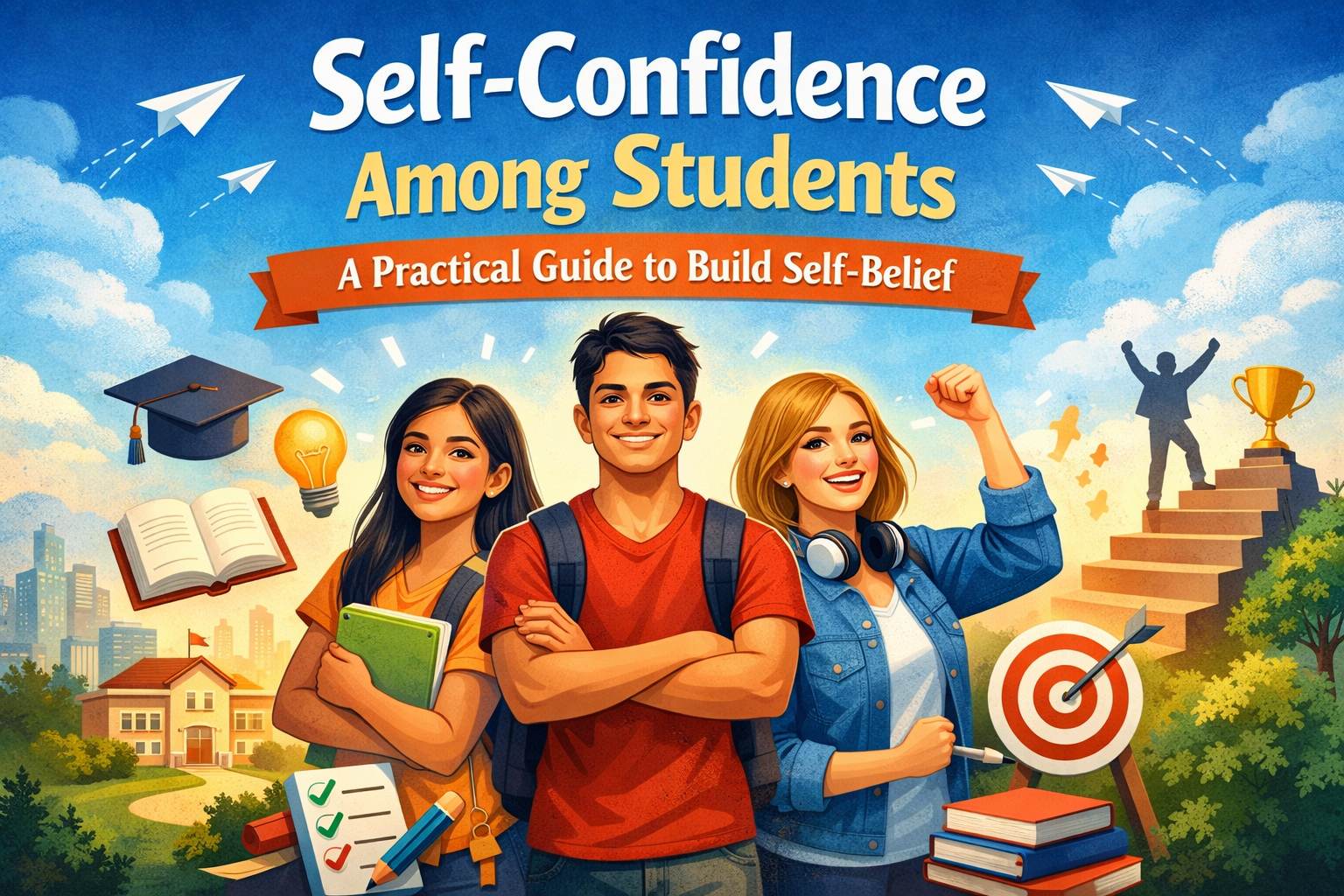
“Confidence is not something you’re born with – it’s a skill that can be trained.”
— himanshu chhikara
Self-confidence is one of the most valuable skills a student can develop. It shapes academic performance, communication abilities, relationships, and long-term career decisions. Yet many students struggle with self-doubt, fear of failure, and constant comparison—especially in today’s fast-paced, social-media-driven world.
This practical guide is designed to help students build strong self-confidence through simple habits, mindset shifts, and real-life exercises that can be easily applied in everyday student life.
The Importance of Self-Confidence in Student Life
Self-confidence helps students to:
- Speak confidently in class and group discussions
- Perform better in exams and assignments
- Handle failure without losing motivation
- Build healthy relationships with peers and mentors
- Make clearer and more confident decisions about their future
Confidence does not mean being perfect. It means trusting yourself enough to learn, grow, and improve with time.
Get to Know Yourself
Strengths and Growth Exercise
Take a moment to reflect on yourself honestly.
- Write down three strengths you already have
- Identify two skills you would like to improve
Self-awareness creates clarity. Confidence grows when you accept who you are today while working toward who you want to become.
Avoid the Comparison Trap
Comparing yourself to others—especially on social media—can seriously damage self-confidence. Most people share their achievements, not their struggles.
Healthy Mindset
Focus on your own progress instead of comparing your journey with someone else’s.
Daily Habit
Every morning, write one positive thing about yourself, no matter how small. Small reminders build strong self-belief over time.
Set Small and Achievable Goals
Big goals can feel overwhelming. Break them into smaller, manageable steps.
Examples:
- Study for 30 minutes daily instead of long, tiring sessions
- Improve one subject at a time
- Practice presentations in front of a mirror before presenting
Small successes create momentum and build long-term confidence.
Improve Interpersonal Communication
Confidence grows when you can express yourself clearly.
Simple ways to practice:
- Participate in group discussions
- Read aloud while studying
- Observe confident speakers and learn from their style
The more you communicate, the more comfortable and confident you become.
Take Care of Your Body and Mind
A healthy body supports a confident mind.
- Get 7–8 hours of sleep
- Eat balanced meals
- Do light exercise or daily walking
- Practice deep breathing or meditation
Mental clarity and physical energy play a key role in building self-belief.
Learn from Failure Instead of Fearing It
Failure is a part of learning, not a sign of weakness. Every mistake teaches a lesson.
Ask yourself:
- What went wrong?
- What can I do better next time?
Treat failure as feedback, not as proof that you are incapable.
Avoid Negative Influences
Your environment strongly affects your confidence.
Choose friends and mentors who:
- Encourage growth
- Support your goals
- Motivate you to improve
Try to distance yourself from constant negativity—it slowly weakens self-belief.
Practice Positive Self-Talk
The way you speak to yourself shapes your confidence.
Replace negative thoughts with positive ones:
- “I’m learning and improving.”
- “I can do this with practice.”
- “Progress matters more than perfection.”
Positive self-talk builds emotional strength and resilience.
Step Out of Your Comfort Zone
Confidence grows when you try new things.
- Volunteer for presentations
- Join clubs or competitions
- Learn a new skill or technology
Every step outside your comfort zone makes you stronger and more confident.
Final Thoughts
Building self-confidence is a journey, not a one-time achievement. Be patient with yourself, stay consistent, and focus on progress rather than perfection.
Self-confidence is not about being better than others—it’s about becoming better than who you were yesterday.
Start today. Your future self will thank you.
Heyy there
Yo, 123win64’s the real deal! Been playing here for ages and the wins keep coming. Fair play and good vibes only. Check it out: 123win64